Pore Tightening in Gangnam, Seoul
Gangnam DIORE Clinic Improve Enlarged Pores, Uneven Texture and Skin Smoothness with Personalized Pore Treatments
Pore Tightening in Gangnam, Seoul | DIORE Clinic Gangnam
Pore Tightening refers to aesthetic treatments designed to make enlarged or visible pores appear smaller, cleaner, and more refined by addressing the factors that contribute to their appearance.
At DIORE Clinic in Gangnam, Seoul, pore treatment can be personalized according to each patient's skin type, oil production, acne history, skin texture, collagen condition, congestion, and individual treatment goals.
Depending on the underlying cause of enlarged pores, treatment options may include microneedling, RF microneedling, fractional laser resurfacing, Fractional CO2 Laser, Aqua Peel, Carbon Laser Peel, chemical peeling, or customized combination treatment.
The goal is not to permanently eliminate pores—which are a normal part of healthy skin—but to improve their visible appearance and create smoother, clearer, and more refined-looking skin.
🔹 What Are Enlarged Pores?
Pores are small openings in the skin associated with hair follicles and sebaceous glands.
Everyone has pores, but they can become more noticeable because of factors such as:
- Excess sebum production
- Oily skin
- Blackheads and congestion
- Acne
- Previous acne damage
- Loss of collagen support
- Skin aging
- Sun damage
- Uneven skin texture
- Genetics
Pores are often most visible around the:
- Nose
- Inner cheeks
- Forehead
- Chin
- T-zone
Understanding why the pores appear enlarged is important because different causes require different treatments.
🔹 Can Pores Actually Be Tightened?
Pores cannot be permanently opened, closed, or removed because they are anatomical structures of the skin.
However, aesthetic treatment can help reduce their visible appearance.
Pores may look smaller when treatment helps:
- Remove excess sebum
- Clear congestion
- Improve blackheads
- Smooth surrounding texture
- Support collagen remodeling
- Improve skin firmness
- Reduce acne-related irregularity
For this reason, “pore tightening” generally means making pores look more refined rather than physically eliminating them.
🔹 What Causes Enlarged Pores?
Visible pore size can be influenced by several factors.
Excess Oil Production
Sebaceous glands produce sebum that travels through pores to the skin surface.
When oil production is high, pores can appear more prominent.
Blackheads and Congestion
Accumulated sebum and dead skin cells can stretch or emphasize pore openings.
Genetics
Some people naturally have more visible pores because of inherited skin characteristics.
Acne
Repeated inflammation and congestion may make pores and surrounding texture look more irregular.
Collagen Loss
Collagen supports the skin around pores. As collagen decreases, pore openings may appear more noticeable.
Sun Damage
Long-term UV exposure can affect collagen and skin elasticity, contributing to rougher texture and visible pores.
Aging
Age-related changes in collagen, elastin, and skin structure can make pores look larger over time.
🔹 What Is the Best Treatment for Enlarged Pores?
There is no single best pore treatment for every patient.
The ideal approach depends on why the pores look enlarged.
For example:
- Oily and congested pores: Aqua Peel, chemical peeling, or Carbon Laser Peel may be considered.
- Pores with acne scars: Microneedling, RF microneedling, or fractional laser may be more appropriate.
- Pores associated with collagen loss: Collagen-stimulating treatments may be recommended.
- Significant texture irregularity: Fractional laser or Fractional CO2 Laser may be considered.
At DIORE Clinic Gangnam, treatment can be selected according to the underlying cause rather than treating every patient with the same procedure.
🔹 Microneedling for Pore Tightening
Microneedling creates controlled microscopic channels in the skin using fine needles.
This stimulates a natural repair response and supports collagen remodeling.
As the skin around visible pores becomes smoother and better supported, pores may gradually appear:
- Smaller
- More refined
- Less noticeable
- Better blended with surrounding skin
Microneedling may be particularly useful when enlarged pores occur together with:
- Mild acne scars
- Uneven texture
- Fine lines
- General loss of skin smoothness
🔹 RF Microneedling for Enlarged Pores
RF Microneedling combines controlled needle penetration with radiofrequency energy delivered into selected depths of the skin.
The treatment can stimulate thermal remodeling below the surface while creating controlled mechanical stimulation.
RF microneedling may be considered for:
- Enlarged pores
- Acne scars
- Uneven skin texture
- Mild skin laxity
- Collagen remodeling
- Overall skin refinement
Treatment depth and RF energy can be customized according to the patient's skin condition.
🔹 Fractional Laser for Pore Tightening
Fractional laser technology creates microscopic treatment zones in the skin while leaving surrounding areas untreated.
This stimulates skin renewal and collagen remodeling.
Fractional laser may help improve:
- Enlarged-looking pores
- Acne-related texture
- Mild acne scars
- Rough skin
- Fine lines
- Uneven surface texture
As the skin remodels, pores may appear less noticeable.
Results usually develop progressively rather than immediately.
🔹 Fractional CO2 Laser for Enlarged Pores
Fractional CO2 Laser provides more intensive ablative resurfacing than many gentler fractional treatments.
It creates microscopic columns of controlled tissue removal and thermal stimulation.
Fractional CO2 may be considered when enlarged pores occur together with:
- Significant acne scarring
- Rough texture
- Deeper surface irregularities
- Photoaged skin
Because it is more intensive, Fractional CO2 generally requires more recovery time than superficial pore treatments.
🔹 Aqua Peel for Pore Cleansing
Sometimes pores appear enlarged primarily because they are filled with sebum, dead skin, and blackheads.
Aqua Peel combines fluid-based exfoliation and controlled suction to remove some of this buildup.
Aqua Peel may help with:
- Congested pores
- Blackheads
- Whiteheads
- Excess sebum
- Oily skin
- T-zone congestion
Pores may look cleaner and temporarily less noticeable after treatment.
However, Aqua Peel does not remodel deeper collagen and therefore has a different purpose from microneedling or fractional laser.
🔹 Carbon Laser Peel for Enlarged Pores
Carbon Laser Peel combines a topical carbon solution with controlled laser energy.
The carbon interacts with surface oil and debris before being targeted by the laser.
Treatment may be considered for:
- Oily skin
- Congested pores
- Blackheads
- Enlarged-looking pores
- Dullness
- Mild surface texture
It is generally a lower-downtime option compared with intensive fractional resurfacing.
🔹 Chemical Peels for Pores
Selected chemical peels may help improve pore appearance by reducing surface buildup and congestion.
BHA-based treatments such as salicylic acid may be particularly relevant for oily or blackhead-prone skin because they can interact with sebum within pores.
Chemical peeling may help with:
- Blackheads
- Whiteheads
- Excess oil
- Congestion
- Rough surface texture
It cannot permanently reduce anatomical pore size, but cleaner pores can appear less prominent.
🔹 Pore Tightening for Oily Skin
Patients with oily skin frequently experience more visible pores.
Excess sebum can accumulate within the pore opening and make pores appear larger.
A pore-care plan for oily skin may focus on:
- Sebum control
- Congestion reduction
- Exfoliation
- Blackhead management
- Appropriate skin hydration
- Collagen support when necessary
Depending on the patient, treatment may include Aqua Peel, chemical peeling, Carbon Laser Peel, or a combination plan.
🔹 Pore Tightening for Dry Skin
Dry or dehydrated skin can also make texture and pores appear more noticeable.
When the surface is rough or dehydrated, light reflects unevenly and pore shadows may look stronger.
For these patients, excessive oil-control treatment may not be appropriate.
A personalized plan may instead combine:
- Gentle exfoliation
- Hydration
- Skin-barrier care
- Collagen-stimulating treatment when appropriate
The treatment strategy should therefore be based on skin type rather than pore appearance alone.
🔹 Pore Tightening for Acne-Prone Skin
Acne-prone skin may have a combination of:
- Excess sebum
- Congested pores
- Blackheads
- Inflammation
- Post-acne texture
- Acne scars
Treatment depends on whether active acne or residual texture is the main concern.
For example, active congested skin may require pore cleansing and acne management before deeper resurfacing is considered.
Patients with depressed acne scars and enlarged pores may benefit from collagen-remodeling procedures.
🔹 Pore Tightening for Acne Scars
Enlarged-looking pores and acne scars often occur together.
Patients may describe shallow acne scars as “large pores,” even though the underlying issue is structural skin damage.
When scars are present, treatments may include:
- Microneedling
- RF microneedling
- Fractional laser
- Fractional CO2 Laser
- Subcision in selected cases
- Combination acne-scar treatment
Proper scar assessment is important because pore cleansing alone cannot correct deeper scar tissue.
🔹 Pore Tightening on the Nose
The nose often has highly visible pores because sebaceous gland activity is typically greater in this area.
Common concerns include:
- Blackheads
- Sebaceous filaments
- Excess oil
- Enlarged-looking pore openings
Pore-focused treatment on the nose may emphasize:
- Exfoliation
- Sebum management
- Controlled extraction
- Aqua Peel
- Chemical peeling
- Other congestion-focused care
It is important to distinguish blackheads from normal sebaceous filaments, which naturally refill over time.
🔹 Pore Tightening on the Cheeks
Visible cheek pores may be more strongly related to:
- Genetics
- Acne history
- Reduced collagen support
- Sun damage
- Skin aging
- Uneven texture
For cheek pores, collagen-remodeling treatments such as microneedling, RF microneedling, or fractional laser may be considered depending on severity.
🔹 Pore Tightening on the Forehead
Forehead pores may become more visible because of:
- Oiliness
- Congestion
- Acne
- Skin texture
- Dehydration
Treatment should be selected according to the primary contributing factor.
Patients with oily forehead skin may need a different approach from those whose pore appearance is related primarily to texture or skin aging.
🔹 Pore Tightening for the T-Zone
The T-zone includes the:
- Forehead
- Nose
- Chin
This area often produces more oil than the cheeks and may therefore show:
- Shine
- Blackheads
- Congestion
- Visible pores
Pore care in the T-zone may focus more heavily on exfoliation and sebum control while other facial areas receive different treatment.
Customized treatment by facial zone can therefore be useful for combination skin.
🔹 Pore Tightening vs. Pore Cleansing
Pore cleansing and pore tightening are related but not identical goals.
Pore cleansing focuses on removing:
- Oil
- Blackheads
- Dead skin
- Debris
- Congestion
Pore tightening treatment may additionally focus on:
- Collagen remodeling
- Skin texture
- Acne scars
- Skin firmness
- Structural support around pores
Patients with congested pores may benefit from cleansing alone, while those with structural pore enlargement may need collagen-stimulating treatment.
🔹 Pore Tightening vs. Microneedling
Microneedling is one possible pore-tightening treatment rather than a separate concern.
It may be particularly helpful when visible pores are associated with:
- Acne history
- Mild scarring
- Uneven texture
- Reduced collagen support
Patients whose pores are mainly congested with oil may benefit more initially from cleansing or exfoliating treatments.
🔹 Pore Tightening vs. RF Microneedling
Standard microneedling provides mechanical collagen stimulation.
RF microneedling adds controlled radiofrequency energy at selected depths.
RF microneedling may be considered when the treatment goal includes both:
- Pore refinement
- Deeper collagen remodeling
The ideal option depends on skin thickness, scar condition, sensitivity, and desired downtime.
🔹 Pore Tightening vs. Fractional Laser
Both microneedling and fractional laser may improve visible pores by stimulating remodeling.
Fractional laser uses controlled light energy, while microneedling uses fine needles.
Fractional laser may offer additional resurfacing effects for:
- Rough texture
- Acne scars
- Fine lines
- Sun-damaged skin
The best option depends on skin type and treatment goals.
🔹 Pore Tightening vs. Fractional CO2 Laser
Fractional CO2 provides stronger resurfacing than many low-downtime treatments.
It may be considered when visible pores occur alongside significant acne scars or texture irregularities.
However, stronger treatment also usually means:
- More redness
- More peeling
- More recovery time
- Greater need for careful aftercare
Patients with mild pores may not require intensive CO2 resurfacing.
🔹 Pore Tightening vs. Aqua Peel
Aqua Peel primarily targets congestion, while collagen-stimulating pore treatments target skin structure.
Aqua Peel may be suitable for:
- Oily pores
- Blackheads
- Whiteheads
- Sebum buildup
Microneedling or fractional treatment may be more appropriate for:
- Structural pore enlargement
- Acne scars
- Collagen loss
- Uneven texture
Some patients may benefit from both approaches at different stages.
🔹 Pore Tightening vs. Carbon Laser Peel
Carbon Laser Peel may be useful when pore appearance is associated mainly with:
- Oiliness
- Congestion
- Blackheads
- Mild surface texture
Patients with deeper acne scars or significant collagen loss may require a stronger remodeling treatment.
🔹 Pore Tightening vs. Chemical Peel
Chemical peeling can improve the surface environment around visible pores by removing excess dead skin and reducing congestion.
It may be especially useful for oily or acne-prone skin.
However, chemical peels generally do not provide the same deeper collagen remodeling as microneedling, RF microneedling, or fractional laser.
🔹 Who Is a Good Candidate for Pore Tightening?
Pore treatment may be suitable for patients who:
- Have enlarged-looking pores
- Have oily skin
- Have blackheads or congestion
- Have acne-related texture
- Have mild acne scars
- Have rough or uneven skin
- Want smoother-looking skin
- Want better skin clarity
- Prefer non-surgical treatment
- Want a personalized combination treatment plan
The appropriate option should be selected according to the underlying cause.
🔹 Is Pore Tightening Suitable for Every Skin Type?
Pore treatment can be customized for many skin types, but the ideal technology depends on individual characteristics.
Important factors include:
- Natural skin tone
- Oil production
- Dryness
- Acne activity
- Skin sensitivity
- Pigmentation tendency
- Scar history
- Previous treatments
For example, a patient prone to post-inflammatory hyperpigmentation may require more conservative laser settings than another patient.
🔹 What Happens During a Pore Tightening Consultation?
A useful pore assessment should evaluate more than pore size alone.
At consultation, factors may include:
- Distribution of visible pores
- Oil production
- Blackheads
- Acne history
- Acne scarring
- Skin thickness
- Texture
- Collagen condition
- Pigmentation tendency
- Desired downtime
This helps determine whether the main treatment priority should be cleansing, oil control, resurfacing, collagen remodeling, or a combination.
🔹 What Is a Pore Tightening Treatment Like?
The procedure depends on the technology selected.
For example:
Pore-cleansing treatment may involve exfoliation, solutions, and suction.
Microneedling may involve topical numbing followed by controlled needle treatment.
RF microneedling adds radiofrequency energy.
Fractional laser uses controlled microscopic laser treatment zones.
Fractional CO2 Laser provides more intensive ablative resurfacing.
For this reason, treatment time, sensation, anesthesia, and downtime vary significantly.
🔹 How Long Does Pore Tightening Treatment Take?
Treatment Time: Commonly 20–60 minutes depending on the procedure
Anesthesia: May not be needed for gentle pore cleansing; topical numbing may be used for microneedling or fractional resurfacing
Sensation: May range from gentle suction or tingling to warmth and prickling depending on technology
Treatment Area: Commonly full face, nose, cheeks, forehead, or T-zone
Downtime: Minimal to several days depending on treatment intensity
At DIORE Clinic Gangnam, treatment selection can be adjusted according to the patient's concern and available recovery time.
🔹 Does Pore Tightening Hurt?
Comfort depends entirely on the procedure.
Gentle treatments such as Aqua Peel may involve mild suction or tingling.
Microneedling may feel like prickling or pressure.
RF microneedling may create additional warmth.
Fractional laser can produce heat or stinging.
Topical numbing may be used for more intensive treatments.
🔹 Pore Tightening Downtime
Downtime varies substantially.
Low-Downtime Pore Treatments
Aqua Peel, selected chemical peels, and Carbon Laser Peel may cause:
- Mild redness
- Temporary dryness
- Slight sensitivity
Collagen-Stimulating Treatments
Microneedling or RF microneedling may cause:
- Redness
- Mild swelling
- Sensitivity
- Temporary roughness
Fractional Resurfacing
Fractional laser or Fractional CO2 treatment may cause:
- Redness
- Swelling
- Dryness
- Rough texture
- Peeling
- Crusting in selected cases
Treatment intensity should be selected according to acceptable downtime.
🔹 Pore Tightening Aftercare
Aftercare depends on the procedure but may include:
- Gentle cleansing
- Appropriate moisturizing
- Daily sunscreen
- Minimizing direct sun exposure
- Avoiding unnecessary picking or scrubbing
- Temporarily avoiding strong acids or retinoids when instructed
- Avoiding excessive heat immediately after treatment
- Following specific instructions for resurfacing procedures
- Maintaining an appropriate home skincare routine
The clinic's procedure-specific instructions should always take priority.
🔹 Why Is Sunscreen Important After Pore Treatment?
UV exposure can contribute to collagen degradation and skin texture changes.
It can also increase pigmentation risk after treatments that stimulate or resurface the skin.
Sun protection therefore supports both:
- Skin recovery
- Long-term skin quality
Patients receiving microneedling or laser treatment should be particularly careful with sun exposure during recovery.
🔹 When Will I See Pore Tightening Results?
The timing depends on the treatment.
After pore cleansing, pores may appear cleaner relatively quickly.
Collagen-remodeling treatments produce more gradual changes.
Patients may notice:
- Cleaner-looking pores
- Reduced congestion
- Smoother texture
- More refined skin
- Less noticeable pore openings
- Improved overall skin quality
Collagen-related improvement can continue developing over several weeks or months.
🔹 How Many Pore Tightening Sessions Do I Need?
There is no fixed number of treatments.
The recommended course depends on:
- Cause of enlarged pores
- Skin type
- Degree of oiliness
- Acne scarring
- Treatment technology
- Treatment intensity
- Individual response
- Desired results
Some patients may need ongoing pore maintenance, while structural pore concerns may require a series of collagen-remodeling sessions.
🔹 Can Pores Be Tightened in One Session?
A single cleansing treatment may make congested pores look cleaner quickly.
However, structural pore improvement related to collagen remodeling generally develops gradually and may require multiple sessions.
One-session permanent pore reduction should not be expected.
🔹 How Often Should Pore Treatments Be Done?
Treatment frequency depends on the procedure.
Gentle pore-cleansing treatments may be performed more regularly than deeper microneedling or laser resurfacing.
The skin should be allowed sufficient time to recover between collagen-stimulating treatments.
A personalized schedule helps reduce unnecessary irritation or over-treatment.
🔹 Are Pore Tightening Results Permanent?
No treatment permanently eliminates pores.
Results may be maintained by addressing contributing factors such as:
- Excess oil
- Congestion
- Acne
- Sun exposure
- Collagen loss
- Skin aging
Maintenance skincare and periodic treatments may help preserve a refined appearance.
🔹 Can Enlarged Pores Come Back?
Pore visibility can increase again over time because the factors that contribute to enlarged-looking pores may continue.
These include:
- Sebum production
- Aging
- Collagen loss
- New acne
- Blackheads
- UV exposure
- Genetics
Ongoing maintenance may therefore be useful for some patients.
🔹 Can Pore Tightening Cause Hyperpigmentation?
Some collagen-stimulating or resurfacing treatments create temporary inflammation.
Patients prone to post-inflammatory hyperpigmentation may therefore develop temporary darkening.
Risk depends on:
- Skin tone
- Technology used
- Treatment intensity
- Sun exposure
- Individual response
Treatment settings and aftercare should be personalized accordingly.
🔹 Does Cold Water Close Pores?
Cold water does not permanently close pores.
Temperature can temporarily change how the skin surface feels or looks, but pore anatomy does not open and close like a door.
Long-term improvement in pore appearance generally requires addressing oil, congestion, skin texture, or collagen support.
🔹 Does Steam Open Pores?
Steam does not literally open pores.
Heat can soften surface sebum and make some congestion easier to manage, which may give the impression that pores have opened.
Pore size itself is determined by skin anatomy and surrounding tissue.
🔹 Can Skincare Permanently Shrink Pores?
Topical skincare can help make pores look less noticeable by managing:
- Oil
- Dead skin
- Blackheads
- Skin hydration
- Sun damage
Ingredients used in appropriate routines may support texture and skin quality.
However, skincare cannot permanently remove pores.
Professional treatments may provide additional benefits when structural texture or scarring is present.
🔹 Can Pore Tightening Improve Skin Texture?
Yes. Many treatments used for enlarged pores also improve surrounding skin texture.
Depending on the procedure, patients may notice improvement in:
- Roughness
- Acne-related irregularity
- Mild scarring
- Overall smoothness
- Skin refinement
This is one reason collagen-remodeling treatments are often selected for patients concerned about both pores and texture.
🔹 Can Pore Tightening Be Combined with Other Treatments?
Yes.
Patients seeking pore reduction often have several concerns at once, including:
- Blackheads
- Acne
- Acne scars
- Pigmentation
- Redness
- Dullness
- Fine lines
A combination plan might address pore congestion first and deeper structural issues later.
Treatment timing should be planned to avoid excessive irritation.
🔹 Is Pore Tightening Good Before an Event?
Whether pore treatment is suitable before an event depends on the procedure.
A low-downtime pore facial may be convenient before an event.
Microneedling or fractional laser may produce redness or peeling and should be scheduled with adequate recovery time.
Patients should be especially cautious about undergoing an unfamiliar procedure immediately before:
- Weddings
- Photoshoots
- Important meetings
- Public events
🔹 Pore Tightening in Korea for International Patients
Korea is a popular destination for aesthetic skin treatment, and Gangnam, Seoul is particularly well known among international visitors seeking treatments for pores, acne scars, pigmentation, and skin texture.
International patients seeking pore tightening in Korea may have access to both:
- Low-downtime pore-cleaning treatments
- More intensive collagen-remodeling procedures
Treatment choice should be based on skin condition and travel schedule rather than selecting the strongest procedure available.
🔹 Can I Get Pore Tightening During a Trip to Seoul?
Yes, suitable international visitors may receive pore treatment while in Seoul.
For short trips, lower-downtime options may be easier to incorporate into sightseeing.
Patients planning microneedling, RF microneedling, or fractional laser should consider:
- Visible redness
- Sun exposure
- Important photography
- Makeup needs
- Flights
- Other treatments
- Recovery time
At DIORE Clinic Gangnam, the treatment plan can take travel schedule and available downtime into account.
🔹 Is Pore Tightening Good for a Short Korea Trip?
It depends on the treatment selected.
Patients staying only a few days may prefer lower-downtime options such as pore cleansing or gentle resurfacing.
Patients with acne scars or significant structural pores may benefit more from collagen-remodeling procedures, but these can require more recovery and multiple sessions.
A consultation can help match treatment intensity to both the skin and itinerary.
🔹 Key Benefits of Pore Tightening Treatments
- Helps pores appear less noticeable
- Can improve oily and congested skin
- Helps manage blackheads
- Supports smoother skin texture
- May improve acne-related pore irregularity
- Collagen-stimulating options can improve structural pore appearance
- Multiple treatment technologies can be customized to the underlying cause
- Can address both pore congestion and texture
- Non-surgical treatment options
- Low-downtime and deeper resurfacing options available
- Can be incorporated into acne-scar treatment
- Helps create more refined-looking skin
✨ Why Choose Pore Tightening at DIORE Clinic Gangnam?
DIORE Clinic in Gangnam, Seoul provides personalized aesthetic treatment for Korean and international patients concerned about enlarged-looking pores, blackheads, oily skin, acne-related texture, and overall skin refinement.
Patients can benefit from:
- Individual pore and skin assessment
- Evaluation of oiliness, congestion, texture, and acne history
- Personalized treatment selection
- Microneedling and collagen-remodeling options when appropriate
- Fractional laser treatment planning when appropriate
- Pore-cleansing and exfoliating treatments for congested skin
- Combination treatment planning according to the cause of visible pores
- Consideration of skin tone and pigmentation tendency
- Treatment intensity based on desired downtime
- Advanced Korean aesthetic skin care
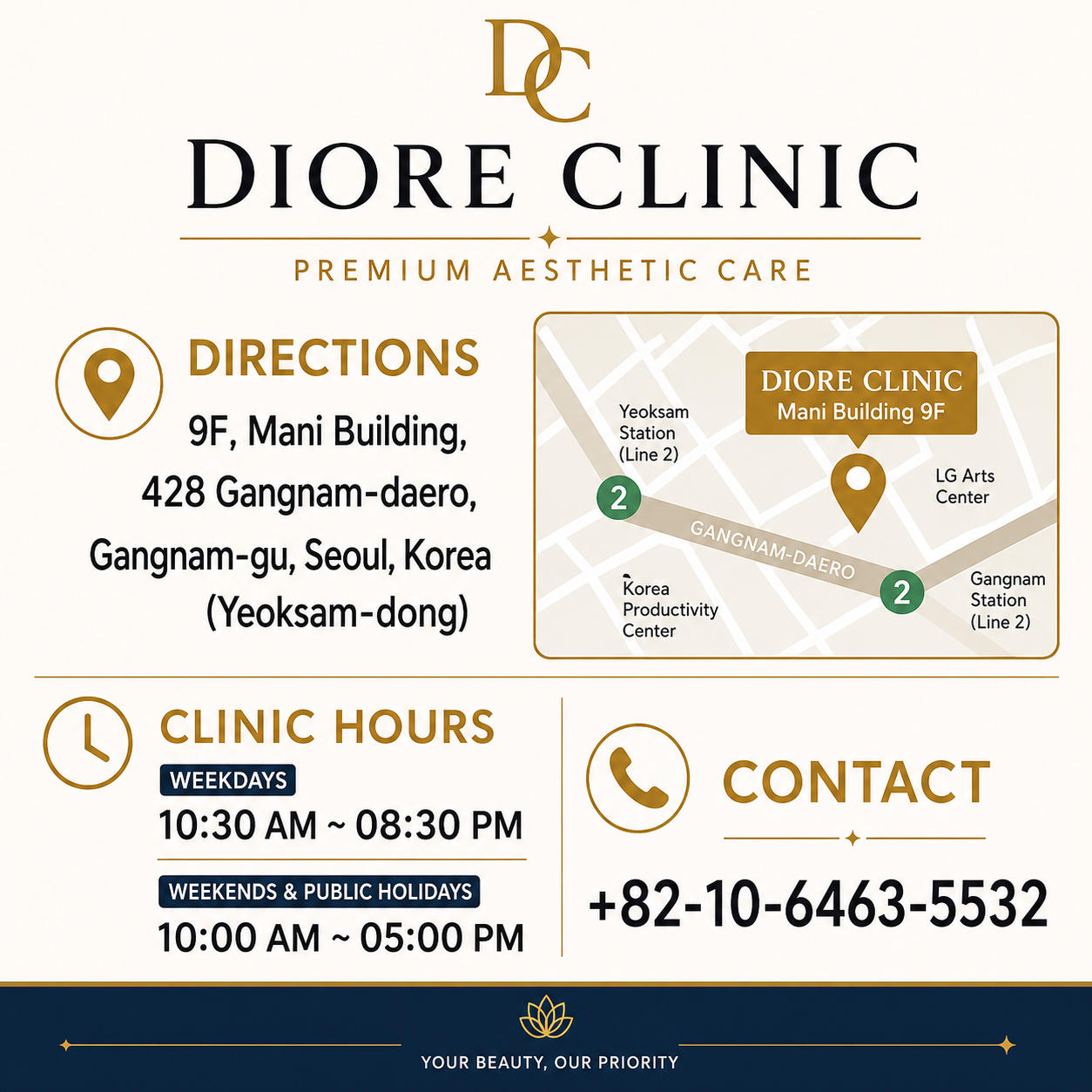
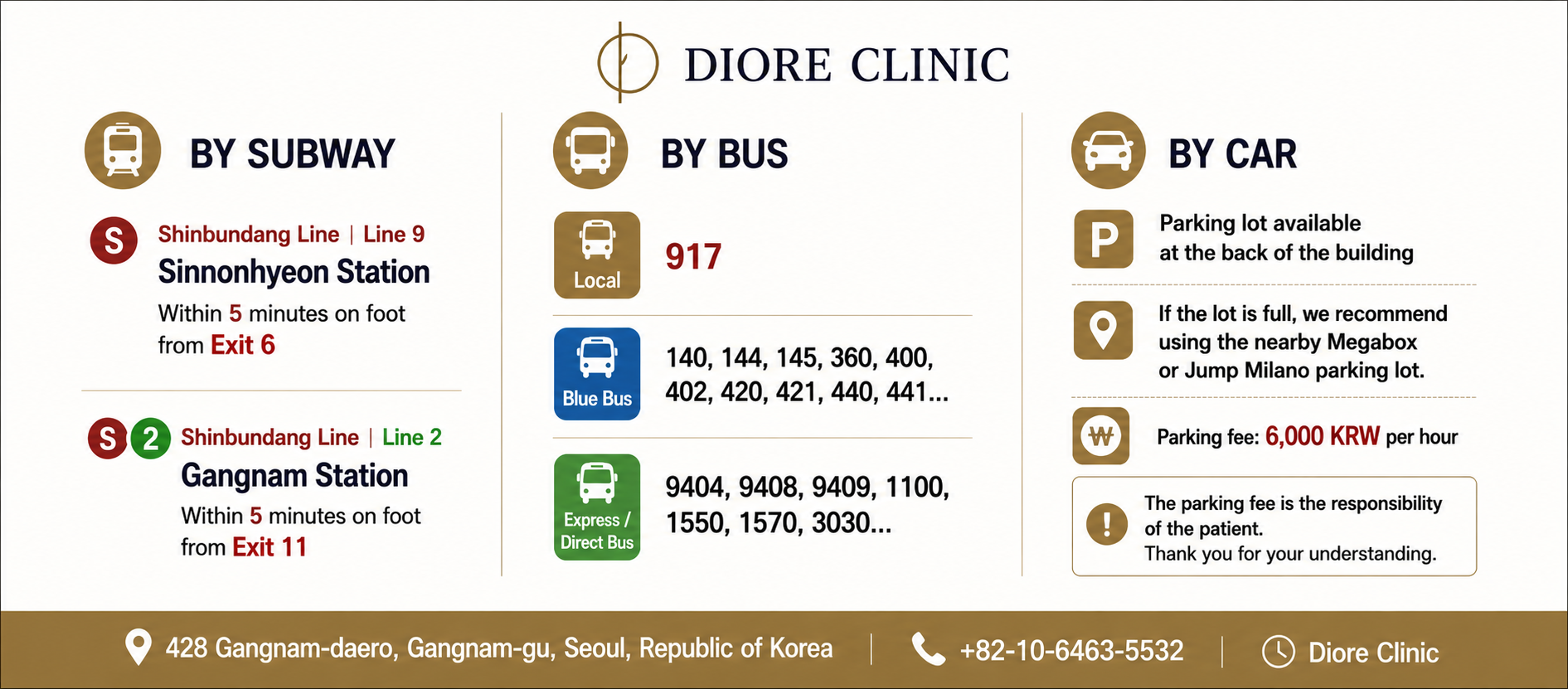
- Convenient location in Gangnam, Seoul
- Foreigner-friendly care for international visitors
🔹 Frequently Asked Questions About Pore Tightening in Gangnam
Can enlarged pores really be reduced?
Yes, their appearance can often be improved. However, pores cannot be permanently removed because they are normal structures of the skin.
What is the best treatment for enlarged pores?
The best treatment depends on the cause. Congested pores may benefit from cleansing and exfoliation, while pores associated with acne scars or collagen loss may respond better to microneedling, RF microneedling, or fractional laser treatment.
Does microneedling reduce pores?
Microneedling may make enlarged pores appear less noticeable by stimulating collagen remodeling and improving surrounding skin texture.
Is RF microneedling good for pores?
RF microneedling may be useful for enlarged pores, acne scars, and uneven texture because it combines needle treatment with radiofrequency-based tissue stimulation.
Does Fractional CO2 Laser reduce pores?
Fractional CO2 Laser may improve enlarged pore appearance through ablative resurfacing and collagen remodeling, particularly when pores occur alongside acne scars or significant textural irregularities.
Does Aqua Peel tighten pores?
Aqua Peel can remove oil, blackheads, and debris, making congested pores look cleaner and less visible. It does not permanently alter pore anatomy.
Does Carbon Laser Peel reduce pores?
Carbon Laser Peel may help improve the appearance of oily, congested pores and mild surface texture, but structural pore enlargement may require deeper collagen stimulation.
Do chemical peels reduce pores?
Chemical peels may make pores appear cleaner and more refined by reducing surface buildup, oil, and congestion.
Can pores be permanently closed?
No. Pores cannot be permanently closed or eliminated.
Why are my pores so large on my nose?
The nose contains many active sebaceous glands, so oil, sebaceous filaments, and blackheads can make pores appear particularly prominent.
Why are my cheek pores large?
Cheek pores may be influenced by genetics, acne history, collagen loss, aging, sun damage, and skin texture.
Can blackheads make pores larger?
Blackheads and congestion can make pore openings appear more prominent. Reducing buildup may improve their appearance.
Does oily skin cause enlarged pores?
High sebum production can contribute to more noticeable pores, particularly across the nose, forehead, and inner cheeks.
Can dry skin have enlarged pores?
Yes. Dehydration and rough texture can make pore shadows more visible even when oil production is not excessive.
Does collagen affect pore size?
Reduced collagen support around pore structures can contribute to more visible pores. This is why collagen-remodeling treatments may improve pore appearance.
How many pore tightening treatments do I need?
The number depends on the cause, treatment used, skin condition, and desired improvement. Structural pore concerns commonly require a series of treatments.
How long does pore tightening take to work?
Pore-cleansing treatments can create relatively immediate cosmetic improvement, while collagen-based treatments generally produce progressive results over weeks or months.
Is pore tightening painful?
It depends on the treatment. Aqua Peel may cause gentle suction, while microneedling and fractional laser can cause prickling, pressure, or heat. Topical numbing may be used for more intensive procedures.
Is there downtime after pore tightening?
Downtime ranges from minimal after gentle pore cleansing to several days after more intensive resurfacing. Treatment should be selected according to available recovery time.
Can pore tightening help acne scars?
Treatments such as microneedling, RF microneedling, or fractional laser may improve both visible pores and selected acne scars.
Can I get pore tightening before an event?
Low-downtime pore treatments may be convenient before an event, but microneedling or fractional resurfacing should be scheduled with enough time for redness or peeling to resolve.
Can foreigners get pore tightening in Gangnam?
Yes. International patients frequently seek pore and skin-texture treatments in Gangnam. The appropriate procedure depends on skin characteristics rather than nationality.
Can I get pore tightening during my Korea trip?
Yes. Low-downtime pore care can fit easily into many travel schedules, while deeper collagen-remodeling treatments require more careful recovery planning.
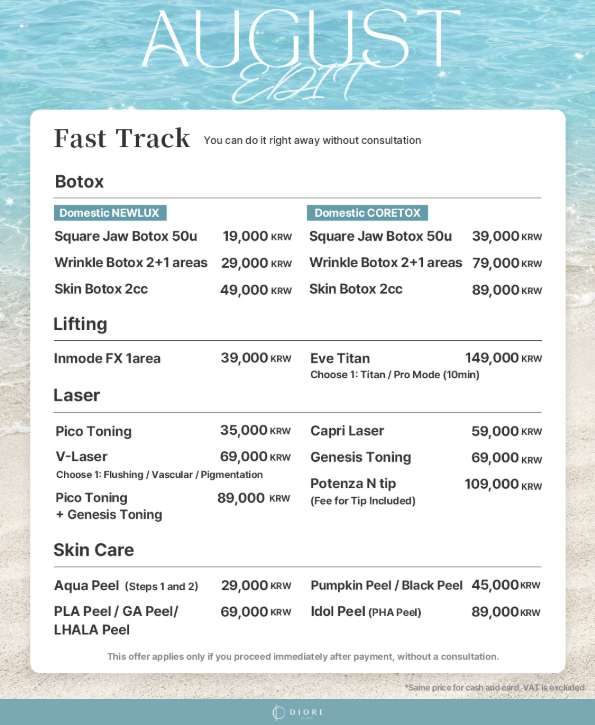
How much does pore tightening cost in Gangnam?
Pricing varies according to the treatment technology, treatment area, combination procedures, and number of sessions. An accurate cost should be confirmed after skin assessment.
Smoother, More Refined-Looking Skin at DIORE Clinic Gangnam
If you are looking for Pore Tightening in Gangnam, Seoul, DIORE Clinic offers personalized treatment planning for enlarged-looking pores, oily skin, blackheads, congestion, acne-related texture, and loss of skin smoothness.
By evaluating whether visible pores are primarily caused by sebum, congestion, acne scarring, collagen loss, texture irregularity, or a combination of factors, DIORE Clinic Gangnam can create an individualized treatment plan using appropriate pore-cleansing, resurfacing, or collagen-stimulating technologies.
For international patients visiting Korea, pore treatment can also be planned around
short stays, sightseeing, important events, sun exposure, flights, and available recovery time, allowing treatment intensity to match both the skin condition and travel schedule.