Chemical Peels in Gangnam, Seoul
Gangnam DIORE Clinic Refresh Dull Skin, Improve Acne and Uneven Texture with Personalized Chemical Peels
Chemical Peels in Gangnam, Seoul | DIORE Clinic Gangnam
Chemical Peels are skin-resurfacing treatments that use carefully selected chemical solutions to exfoliate controlled layers of the skin. They may help improve acne-prone skin, clogged pores, uneven texture, dullness, superficial pigmentation, post-acne marks, fine lines, and overall skin clarity.
At DIORE Clinic in Gangnam, Seoul, chemical peel treatments can be personalized according to each patient's skin type, sensitivity, acne condition, pigmentation pattern, treatment goals, and preferred downtime.
Different peel ingredients and strengths affect the skin at different depths. For this reason, chemical peeling is not one standardized treatment—the appropriate formula, concentration, application time, and treatment frequency should be selected according to the individual skin condition.
🔹 What Is a Chemical Peel?
A chemical peel is an aesthetic skin treatment in which a controlled chemical solution is applied to the skin to encourage exfoliation and renewal.
Depending on the peel, treatment may affect only superficial skin cells or reach deeper layers.
As treated skin renews, chemical peeling may help improve the appearance of:
- Dull skin
- Rough texture
- Clogged pores
- Blackheads
- Acne-prone skin
- Post-acne pigmentation
- Uneven skin tone
- Superficial brown pigmentation
- Fine lines
- Sun-damaged skin
- Overall skin clarity
Chemical peels range from gentle superficial treatments with limited downtime to stronger resurfacing procedures requiring more recovery.
🔹 How Do Chemical Peels Work?
Chemical peels use specific acids or chemical agents to create controlled exfoliation.
The solution loosens or removes selected damaged surface cells and stimulates the skin's renewal process.
Depending on the type and strength of peel, treatment may help:
- Remove accumulated dead skin cells
- Unclog pores
- Reduce surface oil and congestion
- Improve skin-cell turnover
- Smooth rough texture
- Reduce the appearance of superficial pigmentation
- Improve overall brightness
- Support more even-looking skin
The depth of treatment determines both the potential effect and expected downtime.
🔹 What Skin Concerns Can Chemical Peels Treat?
Chemical peels may be considered for patients concerned about:
- Acne
- Blackheads
- Whiteheads
- Congested pores
- Oily skin
- Dull complexion
- Rough skin
- Uneven texture
- Superficial pigmentation
- Post-acne dark marks
- Sun damage
- Uneven skin tone
- Fine lines
- General skin maintenance
The best peel depends on which concern is being prioritized.
🔹 Types of Chemical Peels
Chemical peels can broadly be classified by treatment depth.
Superficial Chemical Peels
Superficial peels primarily exfoliate the outermost layers of the skin.
They may be considered for:
- Mild acne
- Oiliness
- Congested pores
- Dullness
- Mild pigmentation
- Rough surface texture
- Regular skin maintenance
These treatments generally involve less downtime than deeper peels.
Medium-Depth Chemical Peels
Medium-depth peels penetrate more deeply and may provide more noticeable resurfacing.
They may be considered for selected:
- Pigmentation
- Sun damage
- Fine lines
- Texture irregularities
- Post-acne changes
Because the treatment is stronger, visible peeling and recovery are generally more significant.
Deeper Chemical Peels
Deep chemical peeling produces substantially more intensive resurfacing and requires careful medical selection, preparation, and recovery.
Not every patient is suitable for deeper peeling, and many aesthetic concerns can be managed using gentler approaches.
🔹 AHA Chemical Peels
Alpha Hydroxy Acids (AHAs) are water-soluble acids commonly used for superficial chemical exfoliation.
Examples include:
- Glycolic acid
- Lactic acid
- Mandelic acid
AHA peels may be considered for concerns such as:
- Dull skin
- Rough texture
- Uneven skin tone
- Superficial pigmentation
- Fine lines
- General skin refreshing
Different AHAs have different molecular sizes and skin penetration characteristics.
🔹 Glycolic Acid Peel
Glycolic acid is a commonly used alpha hydroxy acid.
Because of its relatively small molecular size, glycolic acid can penetrate the skin effectively and promote exfoliation.
Glycolic peels may help improve:
- Dull complexion
- Rough surface texture
- Mild pigmentation
- Uneven skin tone
- Fine lines
- Clogged-looking skin
Peel strength and exposure time should be customized according to skin tolerance.
🔹 Lactic Acid Peel
Lactic acid is another AHA used for controlled exfoliation.
It may be considered for patients seeking improvement in:
- Dullness
- Mild roughness
- Uneven tone
- Superficial pigmentation
- General skin clarity
Depending on formulation and concentration, lactic acid may be selected when a gentler resurfacing approach is appropriate.
🔹 Mandelic Acid Peel
Mandelic acid has a larger molecular structure than glycolic acid and penetrates the skin more gradually.
It may be considered for selected patients concerned about:
- Acne-prone skin
- Oiliness
- Uneven pigmentation
- Congestion
- Sensitive or easily irritated skin
Individual response varies, so treatment strength should still be personalized.
🔹 BHA Chemical Peel
Beta Hydroxy Acid (BHA) peels, particularly salicylic acid, are commonly associated with oily and acne-prone skin.
Because salicylic acid is oil-soluble, it can interact with sebum within the pores.
BHA peeling may help improve:
- Oily skin
- Blackheads
- Whiteheads
- Clogged pores
- Mild acne
- Congestion
- Uneven texture
For patients whose primary concern is pore blockage and excess oil, a BHA-based treatment may be considered.
🔹 Salicylic Acid Peel for Acne
Salicylic acid is frequently used in professional acne-focused chemical peels.
It can help exfoliate within oily, congested skin and may support improvement in selected forms of mild acne.
Treatment may be useful for:
- Comedonal acne
- Blackheads
- Whiteheads
- Excess oil
- Congested pores
However, moderate or severe inflammatory acne may require additional medical treatment rather than chemical peeling alone.
🔹 Chemical Peels for Acne
Chemical peeling can be incorporated into an acne-management plan for suitable patients.
By reducing accumulated dead cells and helping keep pores clearer, selected peels may help improve acne-prone skin.
Chemical peels may be particularly useful for:
- Mild comedonal acne
- Blackhead-prone skin
- Whiteheads
- Excess oil
- Congested pores
Patients with active cystic, nodular, or severe inflammatory acne may need another treatment strategy.
🔹 Chemical Peels for Blackheads and Clogged Pores
Pore congestion occurs when sebum and keratin accumulate within hair follicles.
Selected chemical peels can help exfoliate accumulated surface cells and improve pore congestion.
Patients may notice improvement in:
- Blackheads
- Whiteheads
- T-zone congestion
- Rough pore texture
- Excess oil
The results are generally more effective when chemical peeling is combined with an appropriate daily skincare routine.
🔹 Chemical Peels for Oily Skin
Chemical peels may help remove excess surface buildup and improve the appearance of oily, congested skin.
Certain peel ingredients, particularly salicylic acid, may be selected for patients with oil-related concerns.
Treatment can help the skin appear:
- Cleaner
- Less congested
- Smoother
- Fresher
- More refined
Chemical peels do not permanently stop sebaceous glands from producing oil.
🔹 Chemical Peels for Post-Acne Marks
After acne resolves, flat brown marks may remain.
These are commonly associated with post-inflammatory hyperpigmentation.
Selected chemical peels may gradually improve superficial post-acne pigmentation by encouraging skin-cell turnover.
However, post-acne concerns should be distinguished carefully.
Brown marks involve pigmentation.
Red marks involve vascular or inflammatory changes.
Depressed scars involve structural changes within the skin.
Chemical peels may help selected pigmentation but are not the primary treatment for deep depressed acne scars.
🔹 Can Chemical Peels Treat Acne Scars?
Chemical peels can improve surface texture and selected superficial post-acne changes, but they do not treat every acne scar effectively.
Deep depressed scars such as:
- Rolling scars
- Boxcar scars
- Ice-pick scars
may require other treatments such as:
- Microneedling
- RF microneedling
- Fractional laser
- Fractional CO2 Laser
- Subcision
- Other scar-specific procedures
Certain specialized peeling techniques may be considered for specific scar types, but treatment selection should be based on scar anatomy.
🔹 Chemical Peels for Pigmentation
Chemical exfoliation may help improve selected superficial pigmentation by promoting controlled skin renewal.
Treatment may be considered for:
- Post-acne pigmentation
- Mild sun-related pigmentation
- Uneven skin tone
- Superficial discoloration
- Dull complexion
However, not every pigmentation condition responds the same way.
Patients with melasma, deeper pigment, or highly reactive skin require particularly careful treatment planning.
🔹 Chemical Peels for Melasma
Chemical peels may sometimes be incorporated into a broader melasma treatment plan.
However, melasma is a complex pigmentation condition influenced by factors including:
- UV exposure
- Hormones
- Heat
- Genetics
- Inflammation
Aggressive peeling can potentially irritate the skin and worsen pigmentation in susceptible patients.
Treatment should therefore be conservative and individualized.
🔹 Chemical Peels for Sunspots and Age Spots
Superficial chemical peeling may help improve overall sun-damaged skin and mild pigmentation.
However, clearly defined age spots or sunspots may respond more directly to targeted technologies such as:
- Pico Laser
- Pigment-specific laser
- IPL Photofacial
Chemical peeling may be more appropriate when pigmentation occurs together with widespread dullness or rough surface texture.
🔹 Chemical Peels for Dull Skin
One of the common reasons patients choose a chemical peel is to improve dull-looking skin.
Accumulated dead skin cells can make the surface appear:
- Rough
- Tired
- Uneven
- Less reflective
- Less radiant
Controlled exfoliation can remove part of this buildup and create a smoother, fresher-looking surface.
The objective is not to change natural skin color but to improve clarity and brightness.
🔹 Chemical Peels for Uneven Skin Texture
Superficial texture can be affected by:
- Dead skin buildup
- Oil
- Congestion
- Mild acne
- Environmental exposure
- Irregular skin-cell turnover
Chemical peels can help smooth the outer skin layers and improve minor texture irregularities.
For deeper scars or significant textural damage, collagen-remodeling procedures may be more appropriate.
🔹 Chemical Peels for Fine Lines
Selected chemical peels may soften the appearance of superficial fine lines by promoting skin renewal.
The extent of improvement depends on:
- Peel depth
- Skin condition
- Age
- Degree of photoaging
- Treatment frequency
Deeper wrinkles generally require treatments targeting deeper skin structures.
🔹 Chemical Peel vs. Microneedling
Chemical peels and microneedling address different aspects of skin quality.
Chemical Peels may be preferred for:
- Surface dullness
- Acne congestion
- Blackheads
- Superficial pigmentation
- Mild roughness
- Uneven tone
Microneedling may be preferred for:
- Depressed acne scars
- Enlarged-looking pores
- Deeper texture concerns
- Collagen remodeling
- Fine lines
Patients with both pigmentation and acne scars may benefit from a staged approach.
🔹 Chemical Peel vs. Pico Laser
Chemical peeling uses controlled chemical exfoliation.
Pico Laser uses targeted picosecond laser energy.
A chemical peel may be more appropriate for:
- Dullness
- Mild congestion
- General superficial pigmentation
- Rough surface texture
Pico Laser may be more suitable for selected:
- Freckles
- Sunspots
- Defined pigmentation
- Post-acne brown marks
Treatment should be based on the type and depth of the pigmentation.
🔹 Chemical Peel vs. IPL Photofacial
Chemical peels and IPL work through different mechanisms.
Chemical Peel:
- Exfoliates skin chemically
- Helps surface texture
- May improve congestion
- May improve superficial pigmentation
IPL:
- Uses broad-spectrum light
- Targets melanin
- Targets selected vascular redness
- May address sunspots and photodamage
Patients with both rough surface texture and visible redness may require different treatments for each concern.
🔹 Chemical Peel vs. Carbon Laser Peel
Both treatments may be considered for oily, dull, or congested skin.
Chemical Peel may focus on:
- Exfoliation
- Acne
- Blackheads
- Superficial pigmentation
- Skin-cell turnover
Carbon Laser Peel may focus on:
- Excess surface oil
- Congested-looking pores
- Blackhead-prone areas
- General skin refreshing
- Laser-assisted surface cleansing
The better option depends on skin sensitivity and the primary treatment goal.
🔹 Chemical Peel vs. Fractional Laser
A chemical peel primarily addresses the skin through controlled chemical resurfacing.
Fractional laser creates microscopic laser treatment zones and stimulates deeper remodeling.
Chemical peeling may be preferred for:
- Superficial texture
- Dullness
- Mild acne
- Congestion
- Selected pigmentation
Fractional laser may be preferred for:
- Acne scars
- Enlarged pores
- Deeper textural irregularities
- Collagen remodeling
- More significant resurfacing
🔹 Who Is a Good Candidate for Chemical Peels?
Chemical peeling may be suitable for patients who:
- Have dull or rough-looking skin
- Have clogged pores
- Have blackheads or whiteheads
- Have mild acne
- Have oily or congested skin
- Have superficial pigmentation
- Have post-acne brown marks
- Want more even-looking skin
- Want non-surgical skin resurfacing
- Can follow appropriate post-treatment skincare
The right peel depends on skin characteristics and concerns.
🔹 Who Should Be Careful with Chemical Peels?
Treatment may need to be postponed or modified in patients with:
- Active skin infection
- Open wounds
- Significant dermatitis
- Severely impaired skin barrier
- Active cold sores in the treatment area
- Recent aggressive resurfacing
- Significant irritation
- Certain medications or medical conditions
- Known sensitivity to peel ingredients
A consultation should determine whether peeling is appropriate.
🔹 Are Chemical Peels Suitable for Sensitive Skin?
Some patients with sensitive skin may be candidates for carefully selected superficial peels.
However, sensitive or compromised skin can be more prone to:
- Burning
- Irritation
- Redness
- Barrier disruption
- Post-inflammatory pigmentation
The peel ingredient, concentration, application time, and frequency should therefore be customized.
A stronger peel is not automatically a better peel.
🔹 Are Chemical Peels Suitable for Darker Skin Tones?
Chemical peels may be performed across a range of skin tones, but treatment depth and formulation must be selected carefully.
Any significant skin inflammation can potentially trigger post-inflammatory hyperpigmentation, particularly in patients who pigment easily.
Treatment planning may therefore involve:
- Conservative concentrations
- Appropriate peel selection
- Controlled treatment time
- Careful sun protection
- Longer intervals where needed
🔹 What Happens During a Chemical Peel?
A typical chemical peel appointment may involve:
1. Skin Assessment
The patient's acne, pigmentation, sensitivity, oiliness, and skin barrier condition are evaluated.
2. Cleansing
Makeup, sunscreen, oil, and surface impurities are removed.
3. Peel Application
The selected chemical solution is applied for a controlled period.
4. Neutralization or Removal
Depending on the chemical agent, the peel may be neutralized, removed, or allowed to self-neutralize according to the protocol.
5. Soothing and Protection
Moisturizer, soothing products, and sun protection may be applied when appropriate.
🔹 How Long Does a Chemical Peel Take?
Treatment Time: Approximately 20–45 minutes depending on the peel and treatment area
Anesthesia: Usually not required for superficial peels
Sensation: Tingling, warmth, stinging, or mild burning may occur
Treatment Area: Most commonly the face, with selected body areas also possible
Downtime: Depends significantly on peel depth and strength
At DIORE Clinic Gangnam, peel type and strength can be adjusted according to skin condition and desired recovery.
🔹 Does a Chemical Peel Hurt?
Treatment sensation depends on the chemical agent and strength.
Patients may experience:
- Tingling
- Warmth
- Stinging
- Mild burning
- Tightness
Superficial peels are generally more comfortable than medium or deeper peels.
Treatment should be monitored carefully while the chemical solution is on the skin.
🔹 What Happens After a Chemical Peel?
The post-treatment reaction depends on peel depth.
After a superficial peel, patients may notice:
- Mild redness
- Tightness
- Dryness
- Light flaking
- Temporary sensitivity
Stronger peels may produce:
- More visible peeling
- Crusting
- Prolonged redness
- More noticeable sensitivity
- Temporary pigmentation changes
Patients should allow peeling skin to shed naturally.
🔹 Chemical Peel Downtime
Downtime can range from minimal to significant depending on peel depth.
A gentle superficial peel may produce only mild dryness or flaking.
A stronger treatment may cause more visible peeling for several days.
Downtime depends on:
- Chemical ingredient
- Concentration
- Application duration
- Number of layers
- Skin sensitivity
- Treatment area
- Individual healing response
Patients should understand expected recovery before scheduling the treatment.
🔹 Is Peeling Necessary for a Chemical Peel to Work?
Not necessarily.
The amount of visible peeling does not always correspond directly to treatment effectiveness.
Some superficial peels produce minimal visible flaking while still encouraging exfoliation and skin renewal.
Patients should not assume that more peeling automatically means a better result.
Aggressive exfoliation can increase irritation and pigmentation risk.
🔹 Should I Peel Flaking Skin After a Chemical Peel?
No. Patients should generally avoid intentionally pulling, peeling, or scrubbing off flaking skin.
Allowing skin to shed naturally can help reduce the risk of:
- Irritation
- Prolonged redness
- Skin injury
- Hyperpigmentation
- Scarring
Post-treatment skincare should remain gentle.
🔹 Chemical Peel Aftercare
Patients may be advised to:
- Use a gentle cleanser
- Keep the skin moisturized
- Apply broad-spectrum sunscreen
- Minimize direct sun exposure
- Avoid picking peeling skin
- Temporarily avoid scrubs
- Temporarily avoid exfoliating acids
- Follow instructions regarding retinoids
- Avoid harsh or irritating skincare
- Avoid unnecessary heat exposure
- Follow individualized aftercare instructions
Aftercare varies according to the peel type and strength.
🔹 Why Is Sunscreen Important After a Chemical Peel?
Chemical exfoliation can temporarily make the skin more sensitive to ultraviolet exposure.
UV exposure after treatment can contribute to:
- Irritation
- Hyperpigmentation
- Uneven skin tone
- New sun damage
Daily sun protection is therefore particularly important after peeling.
International visitors planning outdoor sightseeing in Seoul should consider this when scheduling treatment.
🔹 Can I Wash My Face After a Chemical Peel?
Cleansing instructions depend on the type of peel used.
Patients should follow the specific protocol provided after treatment.
Once cleansing is appropriate, gentle products and lukewarm water are typically preferred over:
- Scrubs
- Cleansing brushes
- Hot water
- Aggressive rubbing
🔹 Can I Wear Makeup After a Chemical Peel?
The appropriate timing depends on treatment depth and skin response.
After a gentle peel, makeup may be possible relatively quickly for some patients.
After stronger resurfacing, patients may need to wait until the skin barrier has recovered sufficiently.
Individual clinic instructions should take priority.
🔹 Can I Exercise After a Chemical Peel?
Heavy exercise may increase heat, sweating, and facial flushing, potentially irritating freshly treated skin.
Depending on peel intensity, patients may be advised to temporarily avoid strenuous exercise while the skin is sensitive.
🔹 Can I Go to a Sauna After a Chemical Peel?
Saunas, steam rooms, hot baths, and other high-temperature environments may increase irritation and redness during the initial recovery period.
Patients should wait until the skin has recovered according to their aftercare instructions.
🔹 When Will I See Chemical Peel Results?
Some patients notice fresher or smoother-looking skin after the initial recovery period.
Additional benefits may develop progressively with a series of treatments.
Potential improvements may include:
- Smoother texture
- Cleaner-looking pores
- Less congestion
- More even-looking tone
- Reduced dullness
- Improvement in selected superficial pigmentation
Results depend on the peel and skin concern.
🔹 How Many Chemical Peels Do I Need?
Some patients choose a single peel for occasional skin refreshing.
Others undergo a series of treatments for ongoing concerns such as:
- Acne
- Congestion
- Pigmentation
- Roughness
- Dullness
The number of treatments depends on:
- Skin condition
- Peel strength
- Treatment goal
- Skin tolerance
- Response to previous sessions
- Other treatments being used
🔹 How Often Can I Get a Chemical Peel?
The correct interval depends on peel depth and skin recovery.
Gentle superficial peels can generally be repeated more frequently than stronger treatments.
The skin should be fully assessed between treatments to ensure that the barrier has recovered appropriately.
Repeated peeling that is too aggressive can lead to chronic irritation and pigmentation problems.
🔹 Can Chemical Peels Damage the Skin Barrier?
Chemical peeling intentionally creates controlled exfoliation.
If the peel is too strong, applied too frequently, or combined with excessive home exfoliation, the skin barrier can become irritated.
Signs of an impaired barrier may include:
- Persistent redness
- Burning
- Stinging
- Excessive dryness
- Increased sensitivity
- Flaking
- Irritation from normally tolerated products
Professional treatment should balance exfoliation with adequate recovery.
🔹 Can Chemical Peels Cause Hyperpigmentation?
Post-inflammatory hyperpigmentation is a possible complication.
Risk may be influenced by:
- Natural skin tone
- Peel strength
- Skin inflammation
- Sun exposure
- Picking or peeling skin manually
- Individual pigmentation tendency
Careful peel selection, appropriate aftercare, and sun protection can help reduce risk.
🔹 Can Chemical Peels Cause Hypopigmentation?
Excessively aggressive peeling can sometimes affect normal pigmentation and create lighter areas.
This risk is more relevant with deeper treatments.
Treatment depth should therefore be selected carefully according to the patient's skin type and goals.
🔹 Can Chemical Peels Cause Breakouts?
Some patients may notice temporary changes in acne after treatment.
However, significant or persistent worsening should be evaluated rather than automatically considered a normal “purging” response.
Chemical peeling is not suitable for every acne condition.
🔹 Can Chemical Peels Be Combined with Other Treatments?
Chemical peels may be incorporated into a broader treatment plan depending on skin condition.
Patients may have multiple concerns including:
- Acne
- Pigmentation
- Acne scars
- Redness
- Enlarged pores
- Uneven texture
- Fine lines
Other treatments may include:
- Pico Laser
- IPL
- Microneedling
- Fractional laser
- Carbon Laser Peel
- Other aesthetic skin procedures
Combination treatments should be scheduled carefully to avoid excessive irritation or barrier damage.
🔹 Is a Chemical Peel Good Before an Event?
A gentle superficial peel may be considered before an event when sufficient recovery time is available.
However, chemical peeling should not automatically be scheduled immediately before:
- Weddings
- Photoshoots
- Important meetings
- Special events
- Public appearances
Temporary redness, dryness, or visible peeling can occur.
First-time patients should be particularly cautious because their individual response is not yet known.
🔹 Chemical Peels in Korea for International Patients
Korea is a popular destination for aesthetic skincare and dermatology treatments, and Gangnam, Seoul attracts international patients seeking treatments for acne, pores, pigmentation, and skin rejuvenation.
Chemical peels can be particularly convenient for travelers when a gentle superficial treatment is appropriate.
International patients should consider:
- Length of stay
- Expected peeling
- Sun exposure
- Outdoor sightseeing
- Makeup requirements
- Important photography
- Sauna or spa plans
- Other treatments during the trip
🔹 Can I Get a Chemical Peel During a Trip to Seoul?
Yes, suitable international patients may receive a chemical peel during a Seoul visit.
For travelers with limited downtime, a lighter peel may be preferable to more intensive resurfacing.
Patients should discuss their itinerary because extensive outdoor activity and sun exposure may influence treatment timing.
🔹 Can I Fly After a Chemical Peel?
Flying may be possible after many superficial chemical peels.
However, recently treated skin can feel:
- Dry
- Tight
- Sensitive
Airplane cabins also have low humidity.
Patients traveling soon after treatment should moisturize appropriately and follow the clinic's post-treatment recommendations.
🔹 Is a Chemical Peel Good for a Short Korea Trip?
Superficial chemical peels can be suitable for some short-term visitors because treatment time and visible recovery may be relatively limited.
However, stronger peels may be less convenient when the itinerary includes:
- Important photos
- Outdoor sightseeing
- Swimming
- Saunas
- Additional aesthetic treatments
Treatment strength should be chosen according to both the skin and the travel schedule.
🔹 Key Benefits of Chemical Peels
- Controlled skin exfoliation
- Helps improve dull skin
- May reduce clogged pores
- Helps manage blackhead-prone skin
- May benefit oily and acne-prone skin
- Supports smoother surface texture
- Can improve selected superficial pigmentation
- May improve post-acne brown marks
- Helps create more even-looking skin
- Peel strength can be customized
- Non-surgical treatment
- Superficial options can involve relatively manageable downtime
- Can be incorporated into broader skin-maintenance plans
✨ Why Choose Chemical Peels at DIORE Clinic Gangnam?
DIORE Clinic in Gangnam, Seoul provides personalized aesthetic skin treatment for Korean and international patients concerned about acne, congestion, pigmentation, dullness, rough texture, and uneven skin tone.
Patients can benefit from:
- Individual skin assessment before peeling
- Personalized peel selection
- Customized peel concentration and treatment intensity
- Treatment planning according to acne and pore concerns
- Consideration of skin tone and pigmentation tendency
- Superficial treatment options for patients seeking lower downtime
- Combination treatment planning when appropriate
- Advanced Korean aesthetic skin care
- Convenient location in Gangnam, Seoul
- Foreigner-friendly care for international visitors
- Treatment planning that considers travel schedules and recovery time
🔹 Frequently Asked Questions About Chemical Peels in Gangnam
What is a chemical peel?
A chemical peel is a skin-resurfacing treatment that applies a controlled chemical solution to exfoliate selected layers of skin and encourage renewal.
What are chemical peels best for?
Chemical peels may help with acne, clogged pores, blackheads, dullness, rough texture, superficial pigmentation, post-acne marks, and uneven skin tone.
Which chemical peel is best for acne?
Salicylic acid and other acne-focused peels may be considered for oily, congested, or comedonal acne. The right peel depends on the specific acne type and skin sensitivity.
Are chemical peels good for blackheads?
Selected chemical peels, particularly oil-soluble BHA formulations, may help improve blackhead-prone and congested skin.
Can chemical peels reduce pores?
Peels may help pores appear cleaner or less noticeable by reducing congestion and improving surrounding surface texture, but they cannot permanently eliminate pores.
Do chemical peels remove acne scars?
Superficial chemical peels generally do not remove deep depressed acne scars. Deeper structural scars may require microneedling, fractional laser, subcision, or other scar-focused treatments.
Are chemical peels good for pigmentation?
Selected superficial pigmentation may improve with chemical peeling. Deeper pigmentation, melasma, freckles, or defined sunspots may require a different or combination treatment.
Can chemical peels help melasma?
Chemical peels may be included in selected melasma treatment plans, but treatment must be cautious because excessive irritation can worsen pigmentation.
Do chemical peels brighten skin?
By removing accumulated surface cells and improving dullness, chemical peels may make the complexion appear brighter and clearer without changing the patient's natural skin tone.
Does a chemical peel hurt?
Patients may experience tingling, warmth, stinging, or mild burning. Sensation depends on the peel type and strength.
How long does a chemical peel take?
A typical treatment may take approximately 20–45 minutes, depending on the peel, preparation, and treatment area.
How much downtime does a chemical peel have?
Downtime varies from minimal dryness with gentle superficial peels to several days or longer of visible peeling after stronger treatments.
Does my skin have to peel for the treatment to work?
No. Visible peeling is not required for every chemical peel to be effective. Some superficial treatments produce minimal flaking.
Can I peel the skin off after a chemical peel?
Patients should avoid pulling or picking peeling skin. Allowing the skin to shed naturally helps reduce irritation and pigmentation risk.
How many chemical peels do I need?
The number depends on the concern, peel type, skin response, and treatment goals. Some patients choose a single treatment, while acne or pigmentation concerns may require a series.
How often can I get a chemical peel?
Treatment frequency depends on the depth and strength of the peel. The skin should be allowed adequate recovery between sessions.
Are chemical peels safe for darker skin?
They may be suitable when carefully selected, but patients with darker skin or pigmentation tendency may require more conservative treatment to reduce post-inflammatory hyperpigmentation risk.
Can chemical peels make pigmentation worse?
Yes, excessive irritation can trigger post-inflammatory pigmentation in susceptible patients. Appropriate peel strength, sun protection, and aftercare are important.
Can I wear makeup after a chemical peel?
The appropriate timing depends on the peel depth and skin recovery. Patients should follow the aftercare instructions provided by their clinic.
Can foreigners get chemical peels in Gangnam?
Yes. International patients commonly receive aesthetic skin treatments in Gangnam. The appropriate peel should be selected according to the patient's skin rather than nationality.
Can I get a chemical peel during a Korea trip?
Yes. Superficial peels can fit into many travel schedules, but patients should consider potential redness, peeling, sun exposure, and other planned treatments.
How much do chemical peels cost in Gangnam?
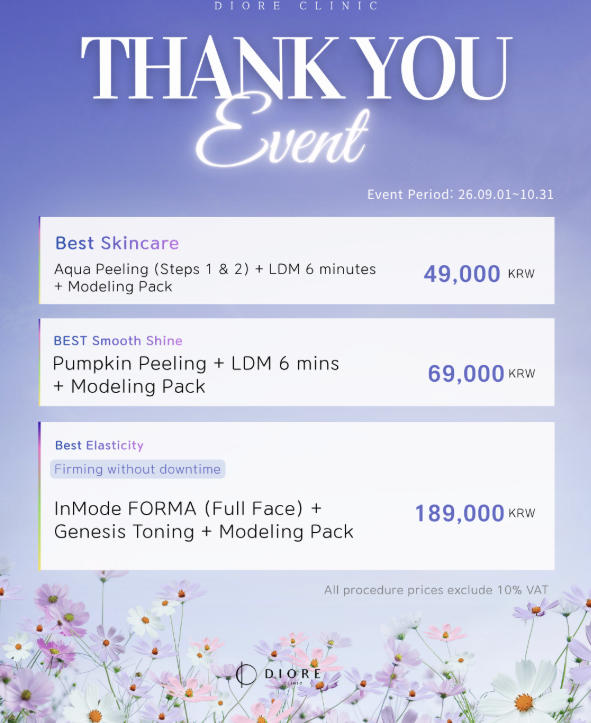
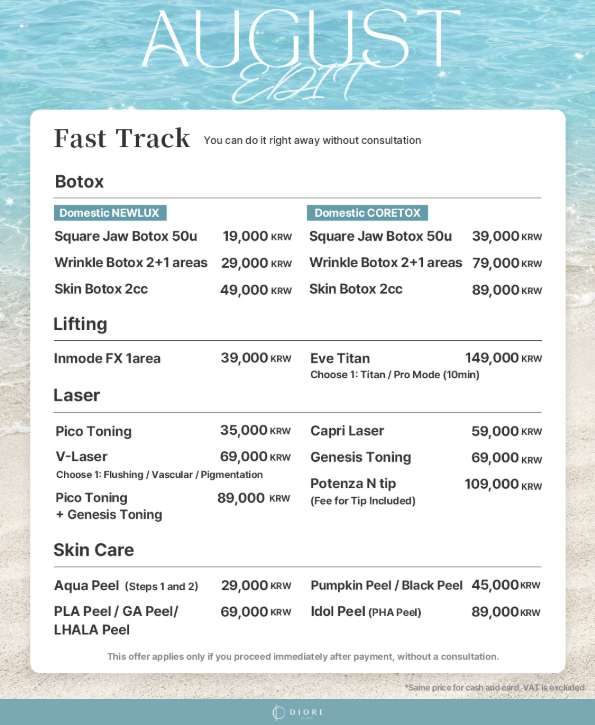
Pricing varies according to the peel type, treatment area, strength, combination treatments, and number of sessions. An accurate cost should be confirmed after skin assessment.
Clearer, Smoother Skin at DIORE Clinic Gangnam
If you are looking for Chemical Peels in Gangnam, Seoul, DIORE Clinic offers personalized chemical exfoliation treatments for acne-prone skin, clogged pores, blackheads, dullness, superficial pigmentation, post-acne marks, uneven texture, and overall skin rejuvenation.
By assessing each patient's skin type, sensitivity, acne condition, pigmentation pattern, treatment goals, and desired downtime, DIORE Clinic Gangnam can develop a customized chemical peel plan using an appropriate treatment depth and formulation.
For international patients visiting Korea, treatment planning can also consider
travel schedules, outdoor sun exposure, visible peeling, important events, and other aesthetic treatments planned during the Seoul visit.